
A social enterprise, so that families' hard work bears fruit.
Ubora means “excellence” in Swahili: it is what we owe our clients, who cannot afford mistakes.
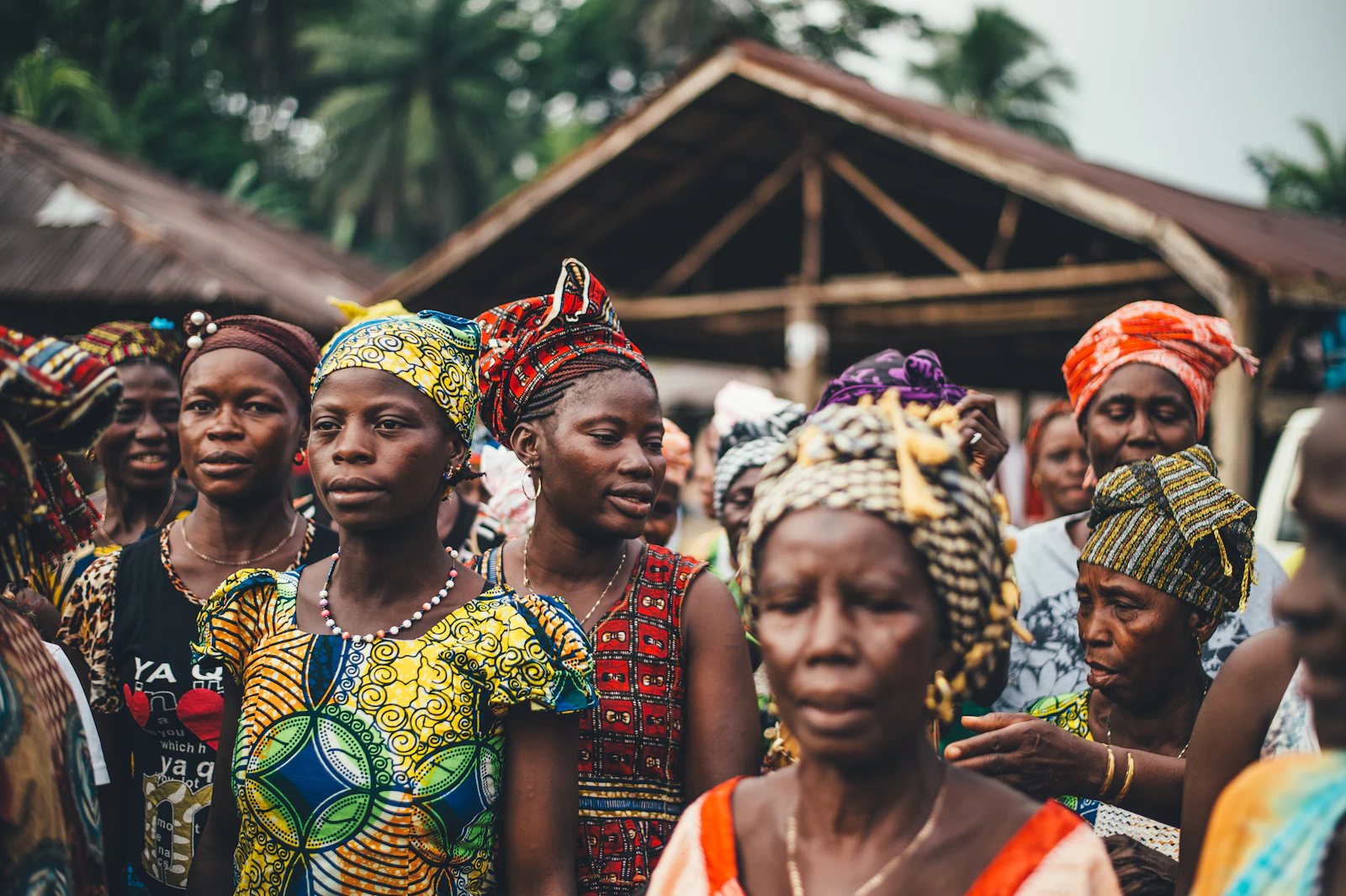
Helping Congolese businesses and communities withstand shocks, and then grow.
Most businesses in the country remain informal and far from credit: at the slightest shock, they lose what they have built. We strengthen what makes them resilient: organisation, savings, credit, skills and tools suited to conditions on the ground.
Why we chose to be a social enterprise
A two- or three-year project ends just as progress begins. We wanted to be able to stay.
Who pays
The organisations that commission our work: NGOs, donors, financial institutions, programmes.
Who benefits
Savings groups, young people, women and rural producers, at reduced rates.
What we mobilise
Through Ubora Fin, funders' capital for the groups we support. Ubora Fin does not lend money.
What we reinvest in
Our tools, community facilitators and follow-up after projects end.
| A conventional business | Ubora, social enterprise | |
|---|---|---|
| The aim | To pay its owners. | To make our clients more resilient. |
| Who is served | Those who can pay the market price. | Also those who cannot, at reduced rates. |
| Surpluses | Distributed to the owners. | Reinvested in our tools, community facilitators and field work. |
| When the project ends | The service ends with the contract. | We stay, and follow-up continues. |
Four Swahili words that guide us
Excellence
Rigorous work and reliable tools. Our clients deserve nothing less.
Resilience
Helping families and businesses get through crises, and then recover.
Transparency
Clear accounts and shared data. That is how trust is built.
Solidarity
No one is left behind. Women, young people and rural areas come first.
Four ways to act with us
The social enterprise does not accept donations: they go to the UBORA association.
Commission work
Start with a pilot project: every service you commission also funds our reduced-rate services.
The pilot projectProvide capital
Ubora Fin directs your capital to the groups we support, and reports back to you.
The role of Ubora FinBecome a partner
Skills, equipment, introductions: tell us what you can contribute.
Propose a partnershipMake a donation
Donations and grants go to the UBORA association, which runs our non-profit projects.
The UBORA associationYou may be wondering
Who can work with Ubora?
Savings groups, entrepreneurs, cooperatives and financial institutions, as well as the NGOs, incubators and donors that support them.
Where do you work?
Throughout the DRC, on site or remotely.
Do your tools work without the internet?
Yes. AKIBA, Ubora Hub, downloaded Académie courses and the business plan generator can all be used without a network connection; data is sent as soon as the connection returns.
Do you offer training on your tools?
Yes. Each tool comes with training and follow-up. The Académie also offers more than 140 online courses with certificates.
Do you need to be a registered business to receive support?
No. We also support entrepreneurs and groups on the path to formal registration.
What happens to support when an NGO's project ends?
We stay: follow-up continues after the project closes, funded partly by our own revenue, and the tools remain in use.
Can Ubora finance our savings group?
Ubora does not lend money. Through Ubora Fin, we mobilise capital from financial institutions, investors and donors, and we introduce the group to an MFI, a COOPEC or a bank.
What does Ubora do for the environment?
Through Ubora Green: reforestation, recycling, agroecology and clean energy, with income for those who carry out the work.
How much does support cost?
It depends on the programme and the number of participants. Services to organisations fund reduced rates for groups and micro-entrepreneurs.
Let's talk about what you want to move forward.
Tell us where you stand: we reply within two working days.